Projects


Our projects

Filter by categories - our services and research fields - or enter search terms!

Researching in a network

Joint research projects

Projects from our service and research fields

Cancel
  • MOIRA – Uncertainty-aware diagnostics for operational condition monitoring

    Core technologies for the construction of hydrogen gas turbines

    Zustandsüberwachung im Betrieb
    © stock.adobe.com, ReisMedia

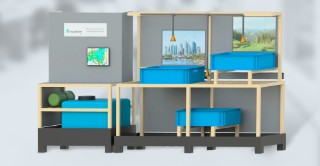
    We have developed a methodology for AI-based monitoring and tested it using real vibration measurement data. What sets this methodology apart is that it evaluates the reliability of each individual processing step and passes the results on to the subsequent analysis steps. This makes it possible to output classification results from the AI diagnostics along with metrics indicating their reliability. The procedure was developed methodically and tested and validated using measurement data from the real-world laboratory, without incorporating the specifics of the use case into the method itself. This makes it possible to apply the method to other use cases.

    more info
  • flugzeugkabine aus recyclingwerkstoff

    The “CirKle” project addresses the global goal of “environmentally sustainable aviation” and makes a valuable contribution to the reusability of cabin components in accordance with the German Circular Economy Act (KrWG). The cabin structures currently in use worldwide consist of phenolic resin-impregnated honeycomb panels that cannot be recycled. The global goal of “CirKle” is to manufacture a new generation of semi-finished products for cabin structures and to directly market recycling-compatible, structurally identical cabin structures - particularly for the retrofit market.

    more info
  • simas Absicherung von autonomen maritimen Systemen
    © ATLAS ELEKTRONIK GmbH

    The increasing automation of maritime systems is raising the bar for securing the AI components used in these systems. In the BMWE-funded “SIMAS” project, we are collaborating with TKMS and its TKMS ATLAS ELEKTRONIK segment, DNV, and FEV Etamax to develop a new methodology based on a risk-based approach. By integrating AI performance data into Bayesian networks, we are enabling a transparent safety assessment of autonomous maritime vessels.

    more info
  • Kreislaufwirtschaft für elektrische Fahrzeugantriebe
    © KI-generated by Fraunhofer LBF

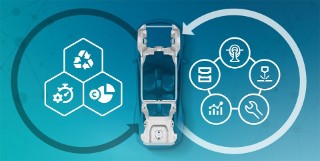
    The research project “Automated and Digitized Circular Economy Solutions for Electric Axle Drive Systems, ReDriveS” has been launched: The 25 partners from industry, small and medium-sized enterprises, and academia—supplemented by associated partners from research and business—are part of one of the national flagship projects in the BMWE’s “DNS of Sustainable Mobility—Digital, Sustainable, System-Capable” program. Automated disassembly processes, innovative recycling methods for rare-earth magnets, and the use of digital twins are intended to lay the cross-industry foundations for sustainable electromobility.

    more info
  • Schwingfestigkeitsdatenbank für Kunststoffe

    In the “Fatigue Strength Database for Thermoplastics,” we bring together over three decades of experience to create a unique foundation for design, material selection, and service life prediction. The database identifies relationships between material, geometry, external influences, and loading, making this information immediately usable for development and validation. The database comprises more than 11,000 tested specimens and 1,300 Wöhler curves. It covers engineering thermoplastics from various manufacturers, different additive formulations, conditioning states, varied specimen geometries, environmental influences, and mechanical loads. Standardized test documentation and evaluation ensure high comparability and direct transferability to simulation and design routines.

    more info
  • offshore - geschweisste maritime tragstruktur

    Offshore wind energy is one of the most important renewable energy sources in Germany. The offshore support structures of wind turbines are subjected to complex environmental stresses, the effects of which on fatigue life can only be assessed with limited reliability using current state-of-the-art methods. Against this backdrop, we have developed a practical yet precise method for predicting the service life of failure-critical welded joints. This opens up significant potential for cost savings in the manufacturing process.

    more info
  • Kunststoffadditive Folienrezyklate Polyethylen

    The use of plastics from recyclates is largely determined by their quality. With the exception of production waste with little damage, a used plastic cannot be used in the form in which it is produced or collected. Usually, if necessary, it is sorted, cleaned and reprocessed, for example into granules. For a sufficient recyclate quality with adequate processing and long-term stability for the intended application, post-stabilization with suitable additives is often required. With appropriate additives such as stabilizers, compatibilizers and reactive additives, recyclates achieve comparable properties to virgin material.

    more info
  • Zir-Tex nachhaltige Uferbesfestigung

    Sustainable plastic recyclates and biodegradable polymers for nonwovens and roofing membranes: 1. Is it possible to recycle and additives different waste streams to produce high-quality recyclates, which in turn can be used to produce fibers and films that can be further processed into competitive nonwovens and films for roofing membranes? 2. Can fibers be produced from bio-based polymers that can not only be spun into nonwovens, but whose degradation in the environment can be adjusted and which do not pose a risk to the environment?

    more info
  • BioFlammschutz Cellulose

    The FNR project “BioFlammschutz” has developed innovative, bio-based, and environmentally friendly phosphorus-containing flame retardants. These are intended to serve as an ecologically and economically advantageous alternative to the halogen-containing flame retardant additives currently in use, which are problematic from an ecotoxicological perspective. The new flame retardants were produced from cotton and wood cellulose and the inexpensive sugar alcohol erythritol using a method developed at Fraunhofer LBF. Their suitability was demonstrated in flame retardant applications for polyolefins and a partially bio-based polyamide.

    more info
  • zynk guss Lebensdauer von zyklisch beanspruchten Bauteilen aus Zink-Druckguss

    Components made of zinc die-cast alloys are used in various industries due to their high surface and component quality and the efficiency of the hot-chamber die-casting process. However, they are rarely used for components subject to high cyclic loads because they lack structural durabiity characteristics. To change this, the cyclic material behavior of various zinc die-cast alloys was investigated and summarized in a design concept.

    more info
  • simulation

    In the development process for new wheels, the structural dynamic properties are estimated by the suppliers using numerical models. To validate these properties, car manufacturers require experimental proof of these properties. For this purpose, the first newly manufactured wheels must be examined using methods of experimental structural dynamics according to special OEM specifications. Based on many years of experience, Fraunhofer LBF is familiar with these methods and the OEM's specifications. We offer wheel manufacturers the opportunity to carry out the required experiments to provide evidence.

    more info
  • KI-basierte Schadensanalyse von technischen Elastomeren
    © 2ragon - stock.adobe.com

    Elastomer failure needs to be detected quickly and easily — but how? Due the variety of failure patterns that occur on elastomer components, it is not always easy to establish the exact cause of a failure. In the internal Fraunhofer project, AI Failure Analysis of Technical Elastomers, researchers are exploring the possibility of objectively analyzing elasto-mer failures through artificial intelligence. The resulting process will be transferred to customer-specific applications at a later stage.

    more info
  • addisim, 3-d-druck, auslegung von kunststoffbauteilen

    Identical parts printed in different orientations in the build space have very different mechanical properties. Knowledge of this anisotropy (directional dependence) is important for reliable simulation of components. In the AddiSim project, scientists from the Fraunhofer LBF investigated the mechanical properties of SLS printed plastic components and developed a simulation method suitable for the design.

    more info
  • Softwaretool zur Konstruktion von Gussbauteilen

    DNAguss stands for continuous numerical design along the process chain of cast components and is an innovative research project that focuses on optimizing the design of cast components using the material EN-GJS-400-18-LT as an example. The aim of the project is to combine all software tools used during the design process of cast components into a single software chain in order to optimize castability, lightweight design and non-destructive testability while ensuring operational strength.

    more info
  • Technologies for rapid adaptation to changing requirements in the event of operational changes in the structural dynamic properties of mechanical systems, e.g. for intralogistics systems, machine tools, vehicles

    more info
  • PEMPAR Lebendsdauer Brennstoffzellen

    In the PEMPAR project, we are developing a measurement methodology for parameterizing models that simulate temperature and humidity effects as well as mechanical loads on PEM. Data gaps are being closed and the testing times for PEM, fuel cells, and electrolysers are being shortened. The focus is on the recording of time-dependent water absorption, thermal and hygric coefficients of linear expansion, and the viscoelastic material properties under various conditions.

    more info
  • FOLAMI Schwingfestigkeitsanalyse Umweltsimulation Korrosium

    In the “FOLAMI” research project, Fraunhofer LBF focused on evaluating mixed steel and aluminum joints produced by form-fitting laser beam welding for durable semi-finished products in shipbuilding. Accompanying the welding process development, numerical and experimental investigations were carried out to verify the structural durabiity, initially at the sample level and then for specifically optimized adapters as connecting elements between steel and aluminum structural elements.

    more info
  • orka3d digitalisierug schweißnaht

    The ORka3D research project—optimization of resource use in welded structures through automated in-line service life assessment based on 3D scans—aims to develop an automated process for evaluating weld seam quality and the associated fatigue strength. This simplifies and improves quality control, as potential weak points can be identified and rectified immediately after production. The project aims to ensure consistent product quality while reducing costs.

    more info
  • porez quantitative charackterisierung rezyklate

    Recycling is becoming increasingly important both socially and economically. In the field of plastics recycling, the recycling of polyolefin waste is becoming particularly important. However, insufficient information on the molecular structure and existing low-molecular impurities is a major obstacle, especially for upcycling. This can be ideally addressed by two-dimensional liquid chromatography, for which methods tailored to recycled materials must be developed. The Fraunhofer LBF is addressing this problem as part of the Industrial Collective Research project PORez.

    more info
  • Zuverlässigkeitsbewertung von Wasserstoff-Brennstoffzellen

    The reliable and efficient design of hydrogen fuel cell systems plays an important role for a fast and sustainably successful transfer to widespread application. Therefore, it is important to validate the materials, components as well as the system as early as possible during development and close to operation, cost-efficiently and flexibly, without the complete system (e.g. automobile) having to be completed or available. Cyber-physical test and validation methods, both in the context of development and final validation, are the solution for this.

    more info
  • Lightweight construction is a design philosophy that is applied in the publicly funded project "ECO2-LInE" with the rethinking of the design of special seats and benches, towing vehicle transitions and pickup attachments. Using the novel additive manufacturing process SEAM (Screw Extrusion Additive Manufacturing), lightweight natural fiber-reinforced plastic components are being developed for this purpose, replacing metal structures.

    more info